Season planning 2027: crew, budget and tools decided by January
Why staffing for the 2027 season is decided between October and January, which figures change at the turn of the year, how to derive the crew requirement from 2026 and what has to be in place before recruiting starts in February.
In het kort
- The 2027 season is decided between October and January: the crew requirement, the staffing budget and the tool used to plan, record time and run payroll. Recruiting runs from February, the season from May, and nobody switches systems mid-season.
- On 1 January 2027 the German minimum wage rises to €14.60 and the Minijob threshold to €633 per month. The 70-day limit, the 11-hour rest period and the duty to record working time stay as they are.
- The crew requirement comes from the 2026 figures: planned versus attended per area, build and strike days, the people who came close to 70 days in the summer. Whoever did not record those plans 2027 by gut feeling.
- § 8 Abs. 1 Nr. 2 SGB IV (short-term employment)
- § 8 Abs. 1a SGB IV (Minijob earnings threshold)
- § 1 MiLoG with the Mindestlohnanpassungsverordnung
- § 5 ArbZG (rest period)
- § 3 Abs. 2 Nr. 1 ArbSchG (time recording)
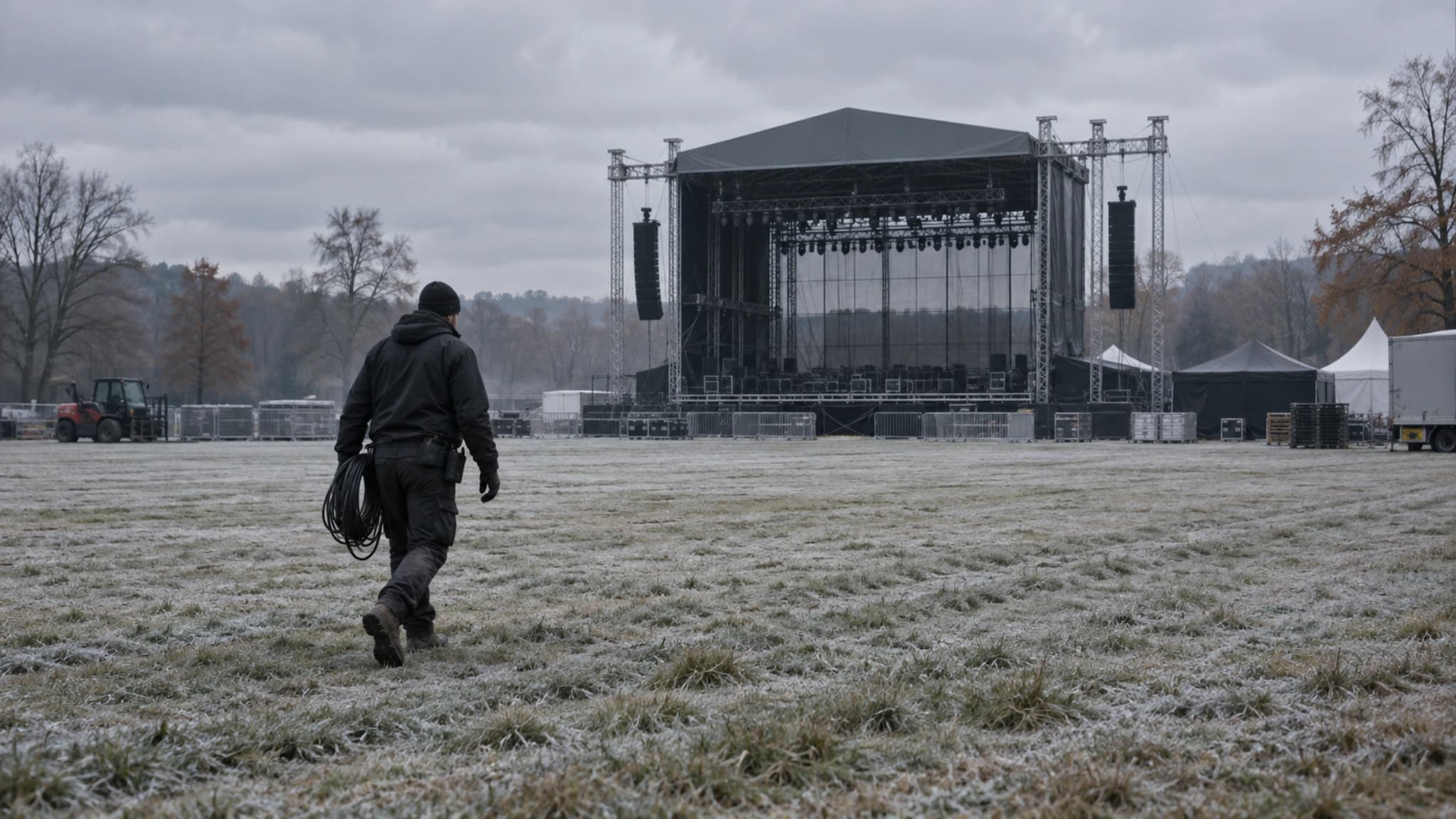
Season planning for 2027 does not start in spring, it starts now: between October and January organisers decide how many people they need per area, what that costs and which tool they use to plan, record time and run payroll. The crew call goes out from February, the season runs from May, and nobody switches systems in the middle of it. Whoever has three answers in January, requirement, budget, tool, has the summer for the event itself.
Why the decision belongs in winter
An organiser's year has three phases, and only one of them is suited to decisions:
| Period | What happens | What can still change |
|---|---|---|
| October – January | Debrief, budget, contracts with service providers, tools | Everything |
| February – April | Crew call, applications, contracts, shift plans for the first events | Processes inside the chosen system |
| May – September | Season | Nothing that touches the crew |
The reason is the crew. Once the first hundred people have registered through an application link and entered their master data, the system is set. A switch in April means two lists, double registration and people who are complete in neither. A switch in July means the time records of the running event sit in the old system and payroll in the new one.

What changes on 1 January 2027
Four figures determine the staffing cost of an event. Two of them change at the turn of the year:
| Figure | 2026 | 2027 | Consequence for planning |
|---|---|---|---|
| Statutory minimum wage | €13.90 | €14.60 | Every rate below it rises; percentage supplements rise too |
| Minijob threshold per month | €603 | €633 | A Minijobber can work slightly more hours per month |
| Short-term employment | 70 working days or 3 months | unchanged | Count per person and calendar year restarts on 1 January |
| Rest period between two shifts | 11 hours, exceptions down to 10 | unchanged | Check build, show and strike days in the plan |
The 70 working days are the figure that helps most in winter: on 1 January every person is back at zero. Whoever sat at 68 days in September 2026 can be planned from scratch in 2027, but only if the count runs from the first event this time and previous employment with other employers is asked for.
Deriving the crew requirement from 2026
The 2027 requirement is not an estimate if 2026 was recorded. Four figures per event and area are enough:
- Planned shifts from the shift plan.
- Filled shifts, those with a confirmed person.
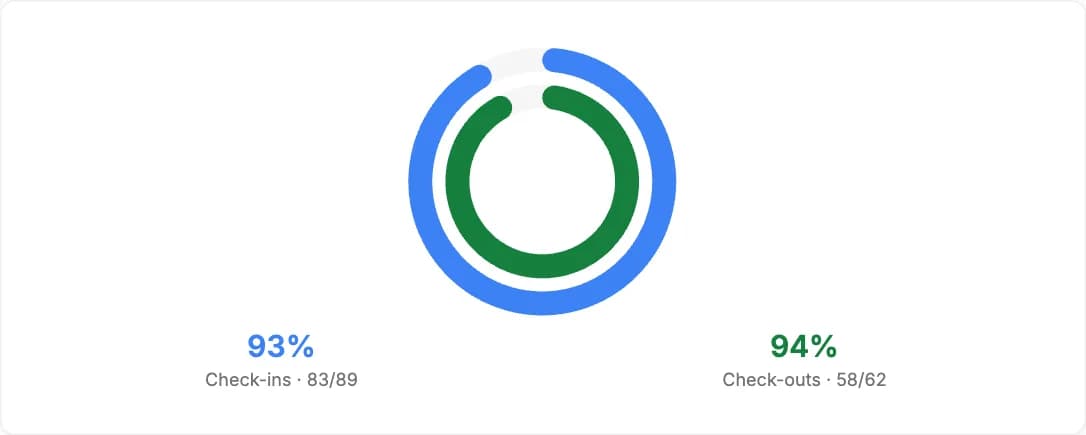
- People who showed up, from check-in.
- Recorded hours, from time tracking.
1 and 2 show where recruiting was late or thin. 2 and 3 give the reserve to plan per area, instead of one flat number for the whole event. 4 gives the budget. Areas with build and strike need their own line, because for the same person those days add to the show days and reach the 70-day limit faster than the show days suggest.
Whoever lacks these figures, because the plan lived in Excel and the hours on paper, plans 2027 on the area leads' gut feeling. That works with three areas and breaks with thirty. The first decision for 2027 is then to run shift plan and time tracking in the same system from the first event, so the figures exist for 2028.
Calculating the staffing budget
The 2027 budget comes from the recorded 2026 hours, the rate per area and the levies per employment type:
- Short-term employees: gross pay without social-insurance contributions, but income tax either individually or at a flat rate. The bulk of a festival crew.
- Minijobbers: gross pay up to €633 per month plus the employer's flat-rate levies. For regular weekend staff in halls and stadiums.
- Employees subject to social insurance: gross pay plus the employer share. The core team and everyone who exceeds 70 days.
Apply the minimum-wage increase to the 2026 hours and the supplements from your time rules to the areas with night work. What is missing from this calculation when hours were not recorded is overtime: the plan said eight hours, strike ran until four in the morning. That is the item on which 2026 budgets broke, and the only one a shift plan alone does not show.
The timeline up to the crew call
| Month | Task |
|---|---|
| October | Pull the 2026 figures: planned, filled, attended, hours per area. Flag people close to 70 days. |
| November | Set the requirement per area for every 2027 event, reserve per area, build and strike separately. |
| December | Calculate the budget at a €14.60 minimum wage, contracts with service providers, requirements for the tool. |
| January | Decide the tool, import the 2026 crew, prepare the application link and the master-data form. |
| February | Crew call, first applications, contracts for the first events. |
The order matters because each row needs the previous one. Whoever picks the tool in January without having pulled the figures in October picks by price and demo, not by what was missing in 2026.
What to measure a tool for 2027 against
The question is not which software has the most features, but which one does the five things that cost time in 2026:
- Import the crew from the spreadsheet and let each person enter the rest themselves: master data, insurance number, previous employment in the calendar year.
- A shift plan that checks while planning: rest period between two shifts, working days of short-term employees, monthly earnings of Minijobbers, before the shift is confirmed, not at month-end.
- Time tracking that works on site: QR-code check-in, also without coverage, matched against the planned shift.
- An export the payroll office can read: DATEV LODAS, DATEV Lohn und Gehalt or StoTax, with wage types and supplements, without retyping. Your tax adviser should have seen the sample files before the decision.
- Data held in the EU with deletion periods for ID data and applications, because ZVÜ lists and master data of hundreds of people live in it.
What is decided by January has to run in February. Allow two weeks for the import, the application link and the briefing of the area leads. How that works with EVENTRA is on the onboarding page; season pricing is under pricing. Bring your own 2026 figures and a 30-minute demo shows a plan for one of your own 2027 events, not for a sample festival.