Sofortmeldung for event staff: who needs it, when it's due, what it costs
The Sofortmeldung (immediate registration) under § 28a Abs. 4 SGB IV applies to hospitality, showman trade, trade-fair construction, security, and other industries. Whether your festival falls under it, what gets reported, and how to get it done on the day of the engagement.
In short
- The Sofortmeldung (immediate registration) is an additional report to the pension insurance system that must be filed by the latest when work begins. It does not replace the normal social-insurance registration.
- Certain industries are required to file it, including restaurants and accommodation, the showman trade (Schaustellergewerbe), trade-fair construction, the security industry, building cleaning, freight forwarding, and construction. An organizer falls under it if its business, or the relevant business unit, belongs to one of these industries.
- A missing or late Sofortmeldung costs a fine of up to €25,000, an ID not carried up to €5,000. Customs and pension insurance specifically check bar, security, and build crews at festivals.
- § 28a Abs. 4 SGB IV
- § 2a SchwarzArbG
- § 8 SchwarzArbG
- § 111 Abs. 1 Nr. 2 SGB IV
- § 6 DEÜV
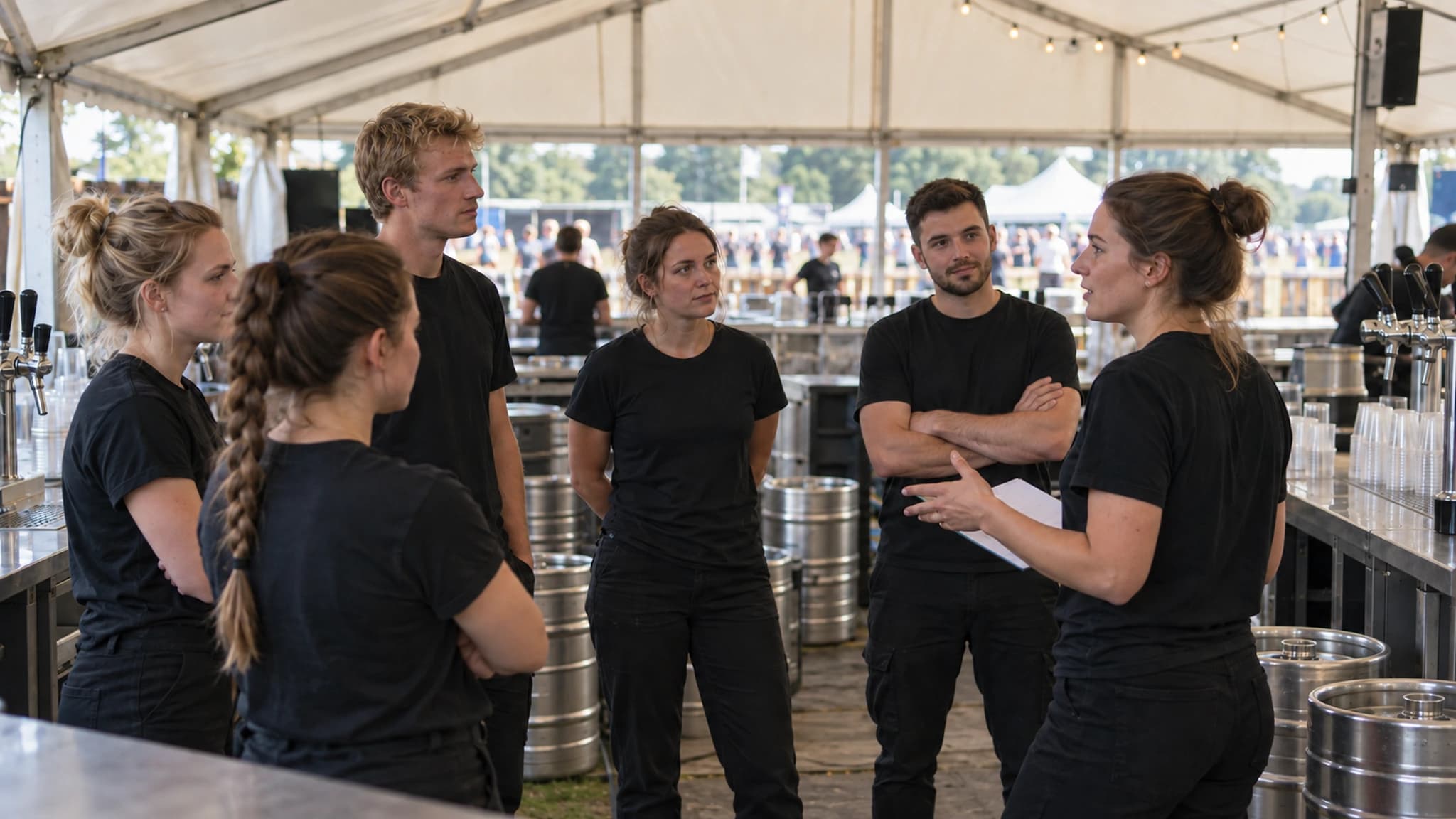
The Sofortmeldung (immediate registration) is a report to the data center of the pension insurance system (Rentenversicherung) that the employer must file by the latest when employment begins, if its business belongs to one of the industries named in § 28a Abs. 4 SGB IV. It's meant to make undeclared work harder: an inspector on the festival grounds can see in real time whether the person at the bar is registered. For organizers, it's not a question of employment type, but of the industry the person is deployed in.
Industries required to file under § 28a Abs. 4 SGB IV
The law lists the industries exhaustively:
- Construction (Baugewerbe)
- Restaurants and accommodation (Gaststätten- und Beherbergungsgewerbe)
- Passenger transport
- Freight forwarding, transport, and related logistics
- Showman trade (Schaustellergewerbe)
- Forestry businesses
- Building cleaning
- Businesses involved in the build and strike of trade fairs and exhibitions
- Meat industry
- Prostitution trade
- Security industry (Wach- und Sicherheitsgewerbe)
For a festival, four are relevant: the hospitality trade for bars and catering, the showman trade for rides and stalls, trade-fair construction for build and strike, and the security industry for security. Stage crew, entrance staff, and volunteers at the info point don't fall under it by the letter of the law, as long as the organizer's business as a whole isn't classified under one of these industries.
| Festival area | Industry under § 28a Abs. 4 SGB IV | Sofortmeldung |
|---|---|---|
| Bar, drinks, catering run in-house | Restaurants (Gaststättengewerbe) | Yes, for the hospitality business unit |
| Security with own employees | Security industry | Yes; with a contracted security firm, that firm files |
| Rides, stalls, games | Showman trade | Yes, at the operator |
| Build and strike, if the business builds trade fairs and exhibitions | Trade-fair construction | Yes, at the trade-fair construction business |
| Shuttle with an in-house driver service | Passenger transport | Only if the business belongs to that industry; a contracted bus company files itself |
| Stage crew, entrance, info point, production office | none of those listed | No, as long as the business as a whole isn't classified under one of the industries |
| Volunteer helpers | no employment | No |
Whether a business is subject to the rule depends on its predominant purpose. In mixed operations, a separable business unit can be subject to it on its own: an organizer running the bars itself has a hospitality business unit. This classification should be documented in writing with the tax advisor, so it doesn't have to be argued at the gate during an inspection.
Sofortmeldung in hospitality
The festival bar is the most common case. Anyone running drinks and catering in-house reports every bar worker before their first shift, including part-timers, Minijob workers and the short-term casual worker for one weekend. The employment type only decides afterwards how the person is paid: as a Minijob with person group 109, or as short-term employment under the 70-day rule with person group 110. For the Sofortmeldung, it makes no difference.
What gets reported
The Sofortmeldung contains little:
- Last name and first name
- Insurance number, or alternatively date of birth, place of birth, and address
- Employer's business number (Betriebsnummer)
- Date employment begins
It's transmitted electronically, through the payroll program or the SV-Meldeportal, with reporting reason 20. The regular social-insurance registration (reporting reason 10) follows with the first payroll run, by the latest six weeks after the start, and is independent of it. If the person doesn't take up the work, the Sofortmeldung is cancelled.
When it's due: by the start of employment at the latest
By the latest when employment begins — that is, before the person carries the first crate. Not that evening, not the following Monday. For a festival with 120 bar staff starting Friday at 2 pm, that means: the reports have to go out Friday morning, and for that, the insurance numbers have to be complete by Thursday.
Obligation to carry ID
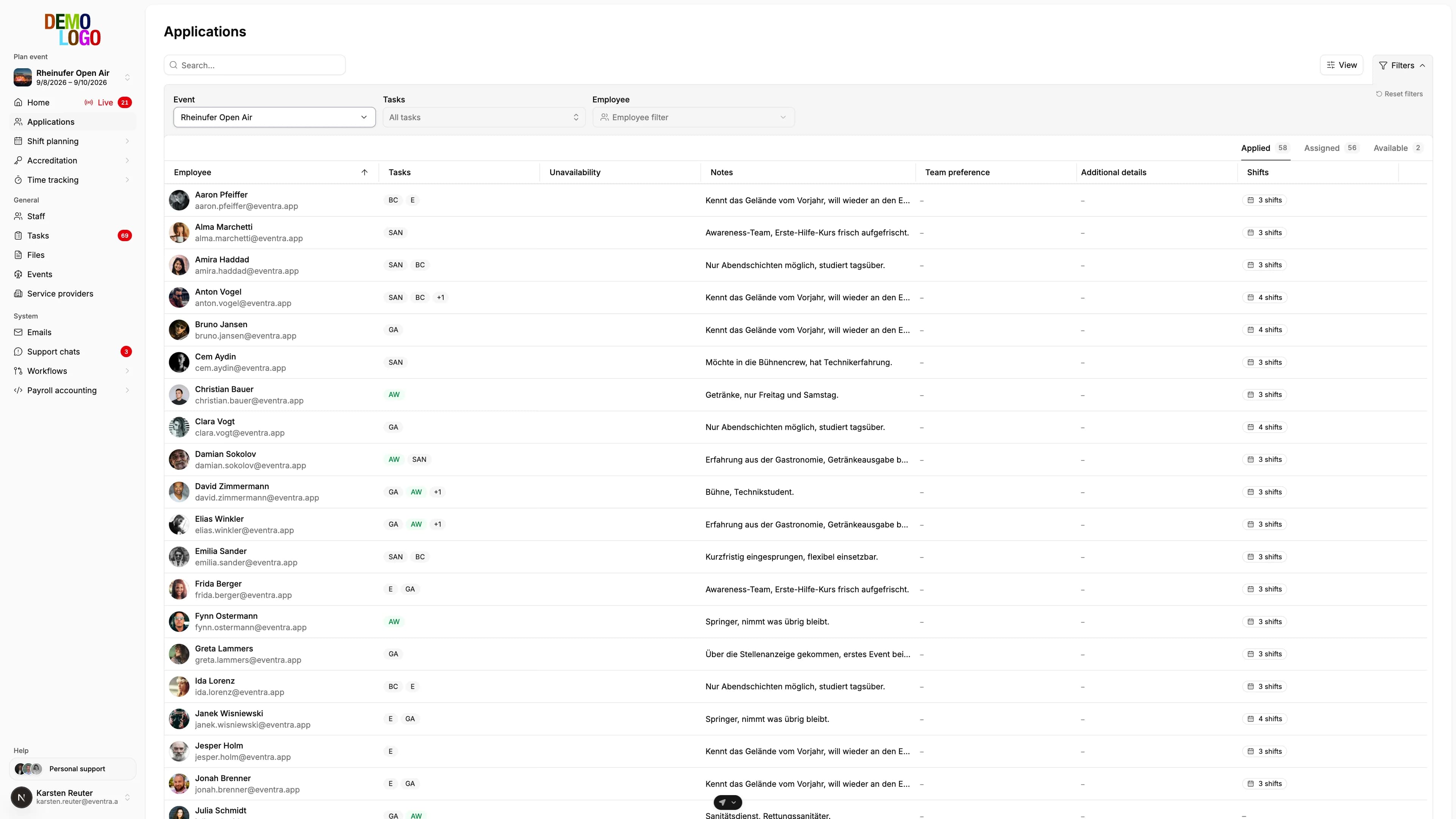
In the same industries, employees must, under § 2a SchwarzArbG, carry their ID card, passport, or a substitute document and present it during an inspection. The employer must inform them of this in writing and keep the record of having done so. A line in the application form with confirmation satisfies this.
Fines for a missing Sofortmeldung
| Violation | Provision | Fine up to |
|---|---|---|
| Sofortmeldung not filed, or filed incorrectly, incompletely, or late | § 111 Abs. 1 Nr. 2 SGB IV | €25,000 per case |
| Employees don't carry or present their ID | § 8 Abs. 2 Nr. 1 SchwarzArbG | €5,000 |
| Employer doesn't give, or doesn't keep, the written notice about carrying ID | § 8 Abs. 2 Nr. 2 SchwarzArbG | €1,000 |
The fine for the Sofortmeldung hits the employer and applies per person who wasn't reported. With 20 unreported bar staff, the risk isn't a single amount. During an inspection by customs' undeclared-work unit (Finanzkontrolle Schwarzarbeit), questions about minimum wage, working-time records, and social-insurance status come up right alongside it. Festivals get inspected because many casual workers come together there on few days. What inspectors want to see in the working-time records is covered in the article on the time-recording obligation at festivals and the handbook entry on working-time documentation.
How to get it done on the day
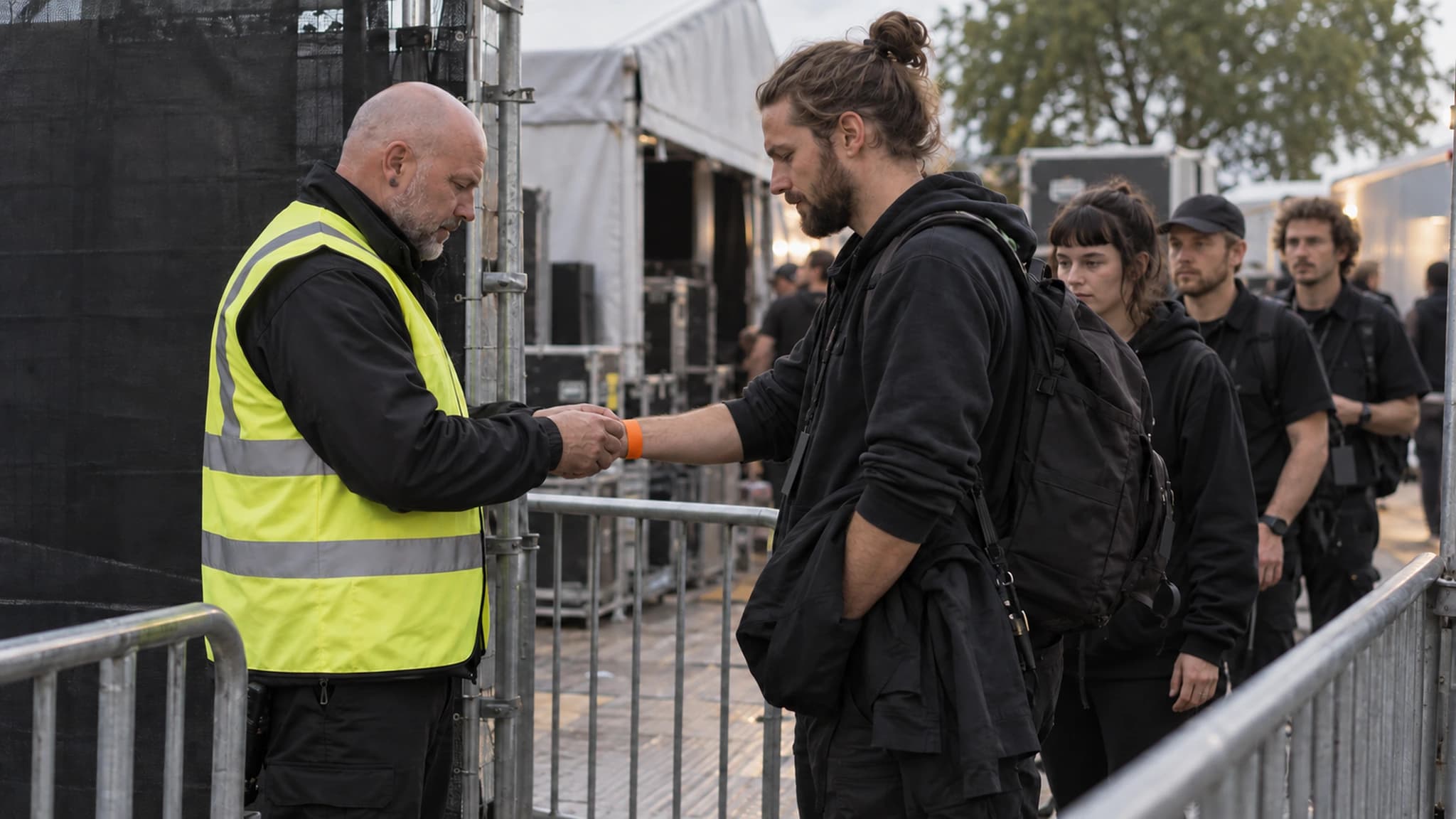
- Ask for the insurance number during the application process. Anyone required to enter it when applying has it on the day of the engagement. Anyone asked for it on the day itself produces dates of birth and guesswork.
- Start of employment from the shift plan. The first planned shift day is the day employment begins. If the shift changes, the date changes.
- Report list to the payroll office the day before. Everyone with a first engagement the next day, with insurance number and start date, as an export. The payroll office files them in one run.
- Cancellation list afterward. Anyone who didn't show up is cancelled before the registration is generated.
- Notice of the carry-ID obligation as a required field in the application form.
The Sofortmeldung is the first step of payroll, not a process of its own. How the master data from the application carries on into the DATEV import file is covered in automating payroll for event staff and DATEV LODAS import from time tracking.